
 EN
EN


How Die-Cutting Precision Affects NasalStrip Performance
Manufacturing excellence in medical adhesive products begins with die-cutting precision, a critical factor that determines the functional performance and user experience of nasal strips. The intricate relationship between cutting accuracy and product efficacy becomes particularly evident in respiratory enhancement devices, where dimensional tolerances directly impact airflow improvement and user comfort. Advanced die-cutting precision ensures consistent product dimensions, optimal adhesion properties, and reliable performance across millions of units produced for global healthcare markets.
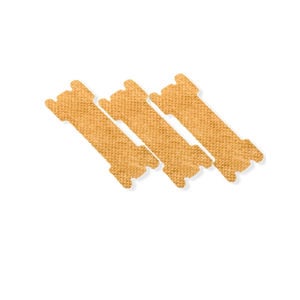
The medical device industry relies heavily on precise manufacturing processes to deliver products that meet stringent quality standards. Die-cutting precision serves as the foundation for creating nasal strips with exact specifications, ensuring proper fit and function for diverse user populations. Modern manufacturing facilities employ sophisticated cutting technologies that maintain tolerances within micrometers, enabling consistent product performance that healthcare professionals and consumers depend upon for respiratory support applications.
Manufacturing Standards and Die-Cutting Technology
Advanced Cutting Systems for Medical Applications
Contemporary die-cutting precision systems incorporate laser-guided positioning, computer-controlled pressure regulation, and real-time quality monitoring to achieve exceptional accuracy in nasal strip production. These technological advances enable manufacturers to maintain consistent edge quality, dimensional stability, and surface finish across high-volume production runs. The integration of precision die-cutting equipment with automated quality control systems ensures that each nasal strip meets predetermined specifications for shape, size, and functional performance.
Industrial die-cutting machines designed for medical applications feature specialized tooling materials and cutting geometries optimized for adhesive substrates commonly used in nasal strip construction. The precise control of cutting forces, blade angles, and material feed rates directly influences the final product quality and performance characteristics. Advanced die-cutting precision systems can accommodate multiple material layers while maintaining clean, consistent cuts that preserve the integrity of adhesive properties and structural components.
Quality Control Integration in Die-Cutting Operations
Sophisticated quality management systems work in conjunction with die-cutting precision equipment to monitor critical parameters throughout the manufacturing process. Real-time measurement systems track dimensional accuracy, edge quality, and material waste ratios, providing immediate feedback for process optimization. These integrated quality control measures ensure that die-cutting precision standards are maintained consistently, resulting in nasal strips with predictable performance characteristics and reliable user outcomes.
Statistical process control methodologies applied to die-cutting operations enable manufacturers to identify trends, predict maintenance requirements, and optimize cutting parameters for maximum efficiency. The continuous monitoring of die-cutting precision parameters allows for proactive adjustments that maintain product quality while minimizing material waste and production downtime. This systematic approach to quality management supports the production of nasal strips that meet or exceed regulatory requirements and customer expectations.
Material Considerations in Precision Die-Cutting
Substrate Properties and Cutting Performance
The relationship between material characteristics and die-cutting precision significantly impacts the final quality of nasal strips produced for respiratory applications. Different substrate materials exhibit varying responses to cutting forces, requiring specialized tooling and process parameters to achieve optimal results. Understanding these material-specific requirements enables manufacturers to optimize their die-cutting precision systems for consistent performance across diverse product formulations and specifications.
Advanced materials used in modern nasal strip construction often incorporate multiple layers with distinct properties, challenging traditional die-cutting approaches. Precision cutting systems must accommodate varying material thicknesses, adhesive strengths, and substrate flexibilities while maintaining clean, accurate cuts. The optimization of die-cutting precision parameters for multi-layer constructions requires extensive testing and validation to ensure that all material components are properly processed without compromising product integrity.
Adhesive Integration and Cutting Challenges
Medical-grade adhesives used in nasal strip manufacturing present unique challenges for die-cutting precision operations due to their tacky nature and potential for tool contamination. Specialized cutting techniques and tool coatings have been developed to address these challenges, enabling clean cuts without adhesive buildup or tool fouling. The proper management of adhesive materials during die-cutting operations is essential for maintaining consistent product quality and manufacturing efficiency.
Temperature control during die-cutting precision operations plays a crucial role in managing adhesive behavior and maintaining cut quality. Optimal temperature ranges must be established for each adhesive formulation to prevent material degradation while ensuring clean separation and dimensional accuracy. Advanced die-cutting precision systems incorporate temperature monitoring and control capabilities to maintain optimal processing conditions throughout production runs.
Performance Impact of Manufacturing Precision
Dimensional Accuracy and Functional Performance
The precise dimensions achieved through advanced die-cutting precision directly correlate with the functional performance of nasal strips in real-world applications. Accurate edge geometry ensures proper contact with nasal surfaces, optimizing airflow enhancement and user comfort. Variations in dimensional accuracy can significantly impact the effectiveness of nasal strips, highlighting the critical importance of maintaining tight tolerances throughout the manufacturing process.
Research studies have demonstrated clear relationships between die-cutting precision and user satisfaction metrics for nasal strip products. Products manufactured with superior dimensional accuracy consistently receive higher ratings for comfort, effectiveness, and overall user experience. This correlation underscores the importance of investing in advanced die-cutting precision equipment and processes to maintain competitive advantage in the healthcare product market.
Consistency Across Production Batches
Maintaining die-cutting precision standards across extended production runs ensures that nasal strips deliver consistent performance regardless of when they were manufactured. This consistency is particularly important for healthcare products where user expectations are based on previous experiences with the same product. Advanced process control systems monitor die-cutting precision parameters continuously, enabling manufacturers to maintain uniform quality standards across millions of units produced annually.
Batch-to-batch consistency in die-cutting precision operations requires careful attention to tool maintenance, material handling, and process parameter control. Regular calibration of cutting equipment, systematic tool replacement schedules, and comprehensive quality testing protocols ensure that manufacturing standards remain constant throughout extended production campaigns. This systematic approach to consistency management supports brand reputation and customer loyalty in competitive healthcare markets.
Economic Benefits of Enhanced Die-Cutting Precision
Waste Reduction and Material Efficiency
Superior die-cutting precision directly contributes to reduced material waste through optimized cutting patterns and improved yield rates from raw material inputs. Precise cutting operations minimize scrap generation while maximizing the number of acceptable units produced from each material roll or sheet. These efficiency gains translate into significant cost savings for high-volume nasal strip manufacturing operations, improving overall profitability while supporting sustainable manufacturing practices.
Advanced nesting algorithms combined with die-cutting precision capabilities enable manufacturers to optimize material utilization by arranging cutting patterns for maximum efficiency. Computer-aided design systems calculate optimal layouts that minimize waste while maintaining the required dimensional accuracy for each nasal strip component. This systematic approach to material optimization leverages die-cutting precision technology to achieve both environmental and economic benefits.
Reduced Rework and Quality Costs
Investment in enhanced die-cutting precision equipment reduces the incidence of dimensional non-conformances and associated rework costs in nasal strip manufacturing. Consistent cutting accuracy eliminates the need for secondary operations to correct dimensional errors, streamlining production workflows and reducing labor requirements. The reduction in quality-related costs through improved die-cutting precision often provides rapid return on investment for manufacturing equipment upgrades.
Quality management systems integrated with die-cutting precision equipment provide early warning of potential issues before they result in significant waste or customer complaints. Predictive maintenance capabilities enabled by advanced monitoring systems help prevent unexpected equipment failures that could compromise cutting accuracy. These proactive approaches to quality management leverage die-cutting precision technology to minimize disruptions and maintain consistent production output.
Future Developments in Die-Cutting Technology
Automation and Industry 4.0 Integration
The evolution of die-cutting precision technology continues toward greater automation and integration with Industry 4.0 manufacturing concepts. Smart manufacturing systems incorporate artificial intelligence and machine learning algorithms to optimize cutting parameters in real-time based on material characteristics and quality feedback. These advanced systems promise to further enhance die-cutting precision while reducing operator intervention and improving overall manufacturing efficiency.
Internet of Things connectivity enables die-cutting precision equipment to communicate with other manufacturing systems, creating integrated production environments that optimize overall line efficiency. Real-time data sharing between cutting stations, quality control systems, and inventory management platforms supports more responsive and efficient manufacturing operations. This connectivity also enables remote monitoring and diagnostics, supporting predictive maintenance strategies that maximize equipment uptime and cutting accuracy.
Advanced Materials and Cutting Technologies
Emerging die-cutting precision technologies are being developed to accommodate new materials and product designs in the evolving nasal strip market. Laser cutting systems offer ultra-precise cutting capabilities with minimal tool wear, while ultrasonic cutting technologies provide clean cuts in challenging material combinations. These advanced cutting methods expand the possibilities for product innovation while maintaining the high precision standards required for medical device applications.
Research into adaptive cutting systems that automatically adjust parameters based on material feedback promises to further enhance die-cutting precision capabilities. These intelligent systems could accommodate material variations in real-time, maintaining consistent cutting quality despite variations in substrate properties or environmental conditions. Such developments would further improve the reliability and consistency of nasal strip manufacturing while reducing the need for operator intervention and process adjustments.
FAQ
What tolerances are typically achieved in precision die-cutting for nasal strips
Modern die-cutting precision systems routinely achieve tolerances within ±0.1mm for nasal strip applications, with advanced systems capable of maintaining ±0.05mm accuracy. These tight tolerances ensure consistent fit and performance across all units produced, meeting the demanding requirements of medical device manufacturing standards.
How does die-cutting precision affect adhesive performance in nasal strips
Die-cutting precision directly impacts adhesive performance by ensuring clean, consistent edges that optimize contact with skin surfaces. Precise cutting prevents adhesive squeeze-out or edge irregularities that could compromise bonding strength or cause user discomfort, maintaining the intended adhesive properties throughout the product lifecycle.
What maintenance requirements support consistent die-cutting precision
Maintaining die-cutting precision requires regular tool inspection, scheduled blade replacement, and systematic calibration of cutting equipment. Preventive maintenance programs typically include daily accuracy checks, weekly tool condition assessments, and monthly system calibrations to ensure consistent cutting performance throughout extended production runs.
How is die-cutting precision validated for medical device compliance
Die-cutting precision validation for medical devices involves comprehensive dimensional analysis using coordinate measuring machines, statistical process control monitoring, and documented verification procedures. These validation protocols ensure compliance with relevant medical device regulations while providing traceability and quality assurance documentation required for regulatory submissions and customer audits.
One-Stop Custom Tape & Patch Supplier, Fully Certified & Safety Guaranteed
Name: Vicky Zhou
Call/Text: +86 198 0595 7675
Email: [email protected]
Website:https://www.hlktape.com
YouTube:https://www.youtube.com/@HLKTape