
 EN
EN


Bagged vs Tin Packaging for NasalStrip Transportation
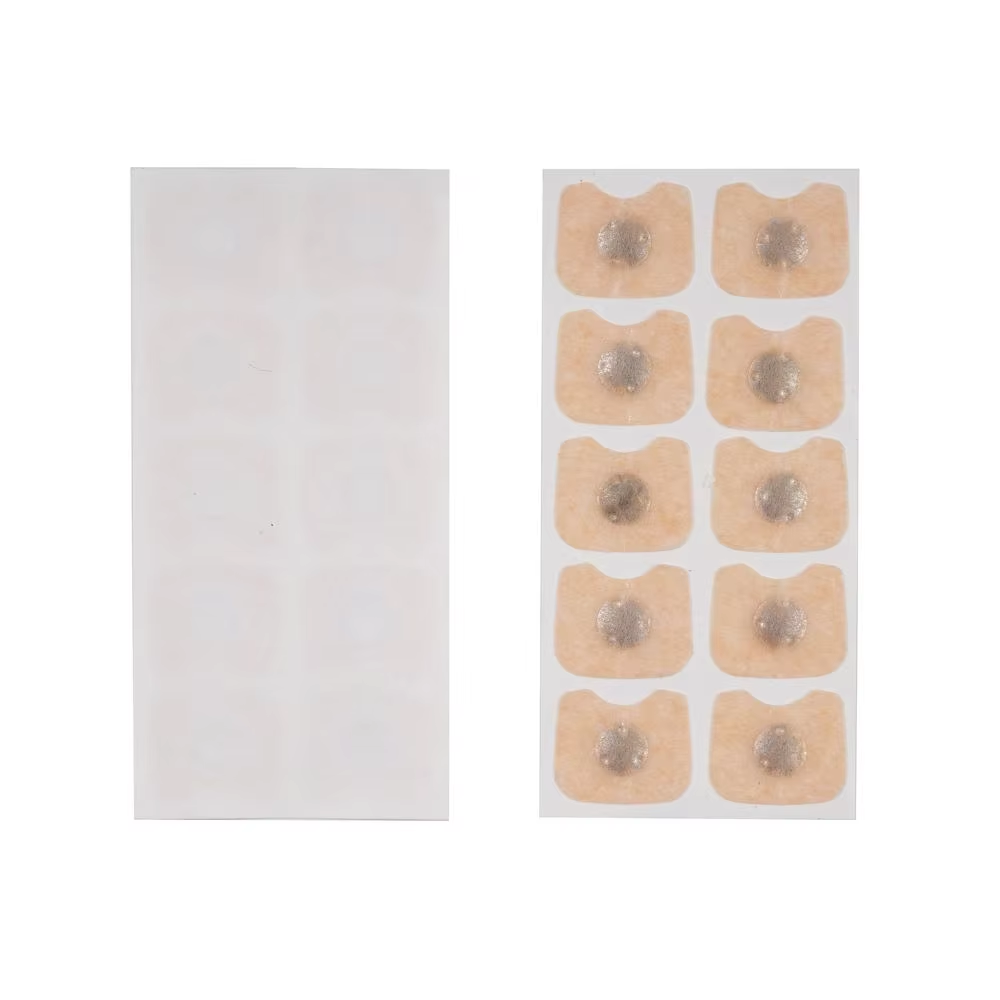
The transportation and storage of medical devices like nasal strips requires careful consideration of packaging solutions that protect product integrity while ensuring cost-effectiveness. When evaluating nasal strip packaging options for shipping and distribution, manufacturers must weigh the benefits and drawbacks of different protective materials. Understanding the specific requirements for nasal strip packaging becomes crucial when deciding between flexible bagged solutions and rigid tin containers, as each approach offers distinct advantages for different transportation scenarios.
Material Properties and Protection Standards
Barrier Performance Characteristics
Flexible bagged packaging systems typically utilize multi-layer laminated films that provide excellent moisture and oxygen barriers essential for nasal strip packaging applications. These materials often incorporate aluminum foil layers or metallized films that create impermeable seals, preventing environmental factors from compromising the adhesive properties of nasal strips during extended transportation periods. The barrier performance of quality flexible packaging can match or exceed that of traditional tin containers while offering significant weight advantages.
Tin packaging provides inherent protection through its rigid metallic construction, offering superior puncture resistance and structural integrity. The hermetic sealing capabilities of tin containers ensure consistent protection levels regardless of external handling conditions. However, the weight penalty associated with metallic packaging can significantly impact shipping costs, particularly for high-volume nasal strip packaging operations where transportation efficiency becomes a primary concern.
Durability Under Transportation Stress
Transportation environments subject packaging to various mechanical stresses including vibration, compression, and impact forces. Flexible nasal strip packaging demonstrates remarkable resilience to these conditions through its ability to flex and absorb impact energy without compromising seal integrity. Modern flexible packaging materials undergo extensive testing to ensure they maintain protective properties throughout typical distribution cycles.
Rigid tin packaging offers superior protection against crushing forces and provides consistent internal dimensions that prevent product movement during transit. The structural stability of tin containers makes them particularly suitable for automated handling systems where dimensional consistency is critical. Nevertheless, the brittle nature of metallic packaging can result in catastrophic failure if subjected to extreme impact conditions, potentially compromising entire product batches.
Cost Analysis and Economic Considerations
Initial Packaging Investment
The upfront material costs for nasal strip packaging vary significantly between flexible and rigid options. Flexible packaging typically requires lower initial investment per unit, allowing manufacturers to achieve better cost efficiency for high-volume production runs. The manufacturing processes for flexible packaging also tend to be more streamlined, reducing production time and associated labor costs.
Tin packaging involves higher material costs due to the metallic construction and more complex manufacturing requirements. However, tin containers often provide opportunities for premium branding and enhanced shelf presentation that can justify the additional investment. The durability of tin packaging also enables reuse applications that may offset initial cost premiums in specific market segments.
Transportation and Storage Economics
Shipping costs represent a significant portion of total nasal strip packaging expenses, making weight considerations crucial for economic optimization. Flexible packaging solutions can reduce shipping weights by up to sixty percent compared to equivalent tin packaging, resulting in substantial cost savings for international distribution. The space efficiency of flexible packaging also allows for optimized loading configurations that maximize container utilization.
Storage requirements differ markedly between packaging types, with flexible options typically requiring less warehouse space due to their compact profile. The stackability advantages of tin packaging must be weighed against the space penalties associated with their rigid construction. Climate-controlled storage costs may also vary depending on the specific barrier properties of each nasal strip packaging solution selected.
Environmental Impact and Sustainability
Material Lifecycle Assessment
Environmental considerations increasingly influence nasal strip packaging decisions as manufacturers seek to reduce their carbon footprint. Flexible packaging generally requires fewer raw materials and generates lower transportation-related emissions due to reduced weight. The manufacturing energy requirements for flexible packaging are typically lower than those associated with tin production, contributing to overall environmental benefits.
Tin packaging offers superior recyclability characteristics, with metallic materials maintaining their properties through multiple recycling cycles. The durability of tin containers also supports reuse applications that can extend product lifecycles. However, the energy-intensive production processes associated with metallic packaging must be considered when evaluating overall environmental impact.
End-of-Life Disposal Considerations
Disposal pathways for different nasal strip packaging materials vary significantly in terms of environmental impact and processing requirements. Multi-layer flexible packaging can present challenges for recycling due to material separation difficulties, though advances in recycling technology continue to improve processing capabilities. Some flexible packaging designs incorporate mono-material construction to enhance recyclability.
Tin packaging provides straightforward recycling pathways through established metallic waste processing infrastructure. The high intrinsic value of metallic materials ensures strong economic incentives for proper disposal and recycling. Consumer behavior studies indicate higher recycling rates for metallic packaging compared to flexible alternatives, contributing to better overall waste management outcomes.
Manufacturing and Processing Efficiency
Production Line Integration
Manufacturing efficiency considerations play a crucial role in nasal strip packaging selection, particularly for high-volume production environments. Flexible packaging systems typically integrate more seamlessly with automated filling and sealing equipment, enabling higher production speeds and reduced labor requirements. The versatility of flexible packaging allows for easy adaptation to different product sizes and configurations without extensive equipment modifications.
Tin packaging requires more specialized handling equipment due to the rigid nature of the containers and precise dimensional tolerances required for proper sealing. The production speeds achievable with tin packaging may be lower than flexible alternatives, but the consistency and reliability of the sealing process often compensate for reduced throughput rates in applications where product integrity is paramount.
Quality Control and Inspection
Quality assurance protocols differ significantly between nasal strip packaging types, with each presenting unique inspection challenges and opportunities. Flexible packaging allows for easy visual inspection of seal integrity through various testing methods including dye penetration and pressure decay testing. The transparency options available with flexible materials also enable direct visual confirmation of product placement and condition.
Tin packaging provides excellent protection but requires different inspection approaches due to the opaque nature of metallic containers. Non-destructive testing methods such as helium leak detection become essential for verifying seal integrity in tin packaging applications. The rigid construction of tin containers facilitates automated inspection processes that can detect dimensional variations or damage that might compromise product protection.
Market Requirements and Consumer Preferences
Retail Display and Branding Opportunities
Consumer perception and retail presentation requirements significantly influence nasal strip packaging decisions in competitive markets. Flexible packaging offers excellent printability and design flexibility that enables eye-catching graphics and informative product labeling. The lightweight nature of flexible packaging also reduces shipping costs to retail locations while providing good shelf presence when properly designed.
Tin packaging provides premium positioning opportunities that can justify higher price points in certain market segments. The substantial feel and distinctive sound of tin containers create tactile experiences that enhance perceived product value. The durability of tin packaging also enables secondary uses that can extend brand exposure and customer engagement beyond the initial product consumption.
Distribution Channel Compatibility
Different distribution channels may favor specific nasal strip packaging approaches based on handling requirements and customer expectations. E-commerce applications often benefit from flexible packaging due to reduced shipping costs and improved damage resistance during individual parcel delivery. The compact profile of flexible packaging also enables efficient automated sorting and handling in fulfillment centers.
Traditional retail distribution may favor tin packaging in applications where product differentiation and premium positioning are important competitive factors. The structural integrity of tin packaging provides advantages in environments with extensive manual handling or where products experience multiple loading and unloading cycles before reaching end consumers.
FAQ
What are the primary cost differences between bagged and tin nasal strip packaging?
Flexible bagged packaging typically costs 30-50% less per unit than tin alternatives, with additional savings from reduced shipping weights. However, tin packaging may justify higher costs through premium branding opportunities and potential reuse value that can offset initial investment premiums in specific market segments.
How do moisture protection capabilities compare between packaging types?
Both packaging types can achieve excellent moisture protection when properly designed. Modern flexible nasal strip packaging with aluminum barrier layers often exceeds the moisture protection of standard tin packaging while weighing significantly less. The key is selecting appropriate barrier materials and sealing technologies for the specific application requirements.
Which packaging type provides better protection during international shipping?
Flexible packaging generally performs better in international shipping due to superior impact resistance and ability to absorb mechanical stresses without failure. The weight advantages of flexible packaging also reduce shipping costs and carbon footprint. Tin packaging provides excellent crush protection but may be more susceptible to damage from extreme impact conditions.
Are there environmental advantages to either packaging approach?
Flexible nasal strip packaging typically has lower environmental impact during production and transportation due to reduced material usage and weight. Tin packaging offers superior end-of-life recyclability and reuse potential. The best environmental choice depends on specific application requirements, distribution distances, and local waste management infrastructure capabilities.
One-Stop Custom Tape & Patch Supplier, Fully Certified & Safety Guaranteed
Name: Vicky Zhou
Call/Text: +86 198 0595 7675
Email: [email protected]
Website:https://www.hlktape.com
YouTube:https://www.youtube.com/@HLKTape