
 EN
EN


The Role of NasalStrips in Sleep Support Product Lines
Sleep disorders affect millions of people worldwide, with snoring and breathing difficulties being among the most common complaints that disrupt restful sleep. The sleep support industry has evolved significantly to address these challenges, with nasal strips emerging as a prominent non-invasive solution. These innovative products have transformed how manufacturers approach respiratory wellness, offering consumers an accessible and effective method to improve their sleep quality without requiring medical interventions or complex devices.
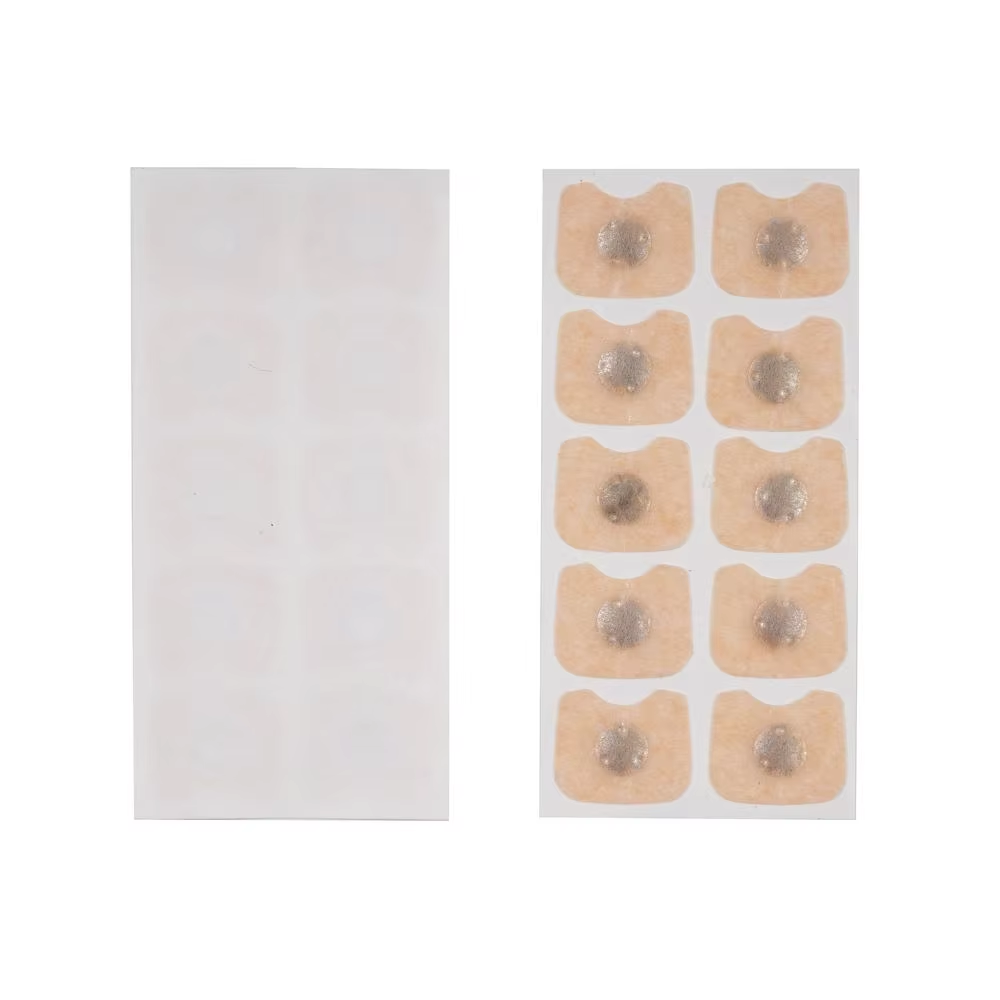
The integration of nasal strips into comprehensive sleep support product portfolios represents a strategic approach to addressing diverse consumer needs. These products work by mechanically opening nasal passages, reducing airway resistance and promoting better airflow during sleep. As manufacturers continue to innovate within the sleep wellness sector, nasal strips have proven their value as both standalone solutions and complementary products within broader therapeutic ecosystems.
Understanding the Mechanism of Nasal Strip Technology
Biomechanical Principles Behind Nasal Expansion
Nasal strips operate on fundamental biomechanical principles that leverage external force to create internal respiratory improvements. The adhesive design applies gentle outward pressure to the nasal sidewalls, effectively widening the nasal valve area where airflow restriction commonly occurs. This mechanical expansion increases the cross-sectional area of nasal passages, reducing the effort required for breathing and minimizing the vibrations that contribute to snoring sounds.
The engineering behind effective nasal strips requires careful consideration of material flexibility, adhesive strength, and anatomical compatibility. Premium nasal strips incorporate spring-like elements that maintain consistent tension throughout the sleep cycle, ensuring sustained nasal dilation even during position changes or facial muscle movement. This technological sophistication distinguishes professional-grade products from basic alternatives, providing superior comfort and effectiveness for end users.
Material Science and Adhesive Innovation
Advanced nasal strips utilize sophisticated materials engineered specifically for extended skin contact and optimal performance. Medical-grade adhesives ensure secure attachment without causing skin irritation or leaving residue upon removal. The backing materials must balance flexibility with structural integrity, allowing natural facial movement while maintaining the mechanical force necessary for nasal expansion.
Recent innovations in nasal strips include moisture-resistant formulations and enhanced breathability features that improve user comfort during extended wear periods. These technological advances address common consumer concerns about skin sensitivity and product durability, making nasal strips more appealing to broader market segments.
Market Positioning Within Sleep Support Ecosystems
Consumer Preference Trends and Market Demand
The sleep support market has witnessed substantial growth as consumers become increasingly aware of the importance of quality sleep for overall health and wellbeing. Nasal strips occupy a unique position within this market, offering immediate benefits without the complexity or cost associated with electronic devices or prescription medications. Consumer preference surveys consistently show high satisfaction rates among nasal strip users, particularly those seeking non-pharmaceutical solutions to breathing difficulties.
Market research indicates that nasal strips appeal to diverse demographic groups, from athletes seeking performance enhancement to older adults managing age-related breathing changes. This broad appeal makes nasal strips valuable additions to product lines targeting multiple consumer segments. The accessibility and ease of use associated with nasal strips contribute to their popularity among consumers who may be hesitant to adopt more complex sleep interventions.
Integration Strategies for Product Line Expansion
Successful integration of nasal strips into existing sleep support product lines requires strategic positioning that highlights complementary benefits rather than competitive overlap. Many manufacturers bundle nasal strips with other sleep aids, creating comprehensive packages that address multiple aspects of sleep quality. This approach increases average transaction values while providing consumers with holistic solutions to their sleep challenges.
Product line managers should consider seasonal demand patterns when incorporating nasal strips into their portfolios. Allergy seasons and winter months typically drive increased demand for respiratory support products, making nasal strips particularly valuable during these peak periods. Cross-promotion with other wellness products can extend the customer lifetime value while establishing nasal strips as essential components of comprehensive sleep hygiene routines.
Manufacturing Considerations and Quality Standards
Production Scalability and Cost Management
Manufacturing nasal strips requires specialized equipment and processes that ensure consistent quality while maintaining cost-effectiveness for mass production. The laminating and die-cutting processes must achieve precise tolerances to ensure proper fit and function across diverse facial anatomies. Quality control systems must monitor adhesive distribution, backing material integrity, and dimensional accuracy throughout the production cycle.
Economies of scale play a crucial role in nasal strip manufacturing, with larger production runs enabling more competitive pricing structures. However, manufacturers must balance volume considerations with the need for flexibility in product variations and customization options. Advanced manufacturing systems allow for efficient changeovers between different nasal strip configurations, supporting diverse product line requirements without compromising efficiency.
Regulatory Compliance and Safety Standards
Nasal strips fall under various regulatory categories depending on their intended use and marketing claims, requiring manufacturers to navigate complex compliance requirements. Medical device regulations may apply to nasal strips marketed for therapeutic purposes, while consumer products face different regulatory frameworks. Understanding these distinctions is essential for proper product development and market positioning strategies.
Safety testing protocols for nasal strips encompass biocompatibility assessments, adhesive safety evaluations, and performance validation studies. These testing requirements ensure that nasal strips meet safety standards for extended skin contact while delivering promised benefits. Manufacturers must maintain comprehensive documentation of testing procedures and results to support regulatory submissions and quality assurance programs.
Innovation Opportunities and Future Developments
Advanced Materials and Smart Technology Integration
The future of nasal strips lies in the integration of advanced materials and smart technologies that enhance user experience and therapeutic effectiveness. Shape-memory alloys and programmable polymers offer possibilities for nasal strips that adapt to individual anatomical variations and breathing patterns. These innovations could significantly improve comfort and effectiveness while maintaining the simplicity that makes nasal strips appealing to consumers.
Smart nasal strips incorporating sensors and connectivity features represent emerging opportunities for manufacturers seeking to differentiate their products in competitive markets. These advanced products could monitor breathing patterns, track sleep quality metrics, and provide personalized recommendations through smartphone applications. Such innovations align with broader trends toward connected health devices and personalized wellness solutions.
Customization and Personalization Trends
Consumer demand for personalized products extends to sleep support solutions, creating opportunities for customized nasal strips tailored to individual needs and preferences. Advanced manufacturing techniques enable the production of nasal strips in various sizes, strengths, and configurations to accommodate diverse user requirements. This customization capability allows manufacturers to serve niche markets while commanding premium pricing for specialized products.
Personalization extends beyond physical characteristics to include aesthetic considerations, with consumers increasingly interested in nasal strips that complement their lifestyle and preferences. Color variations, pattern options, and discrete designs appeal to users who prioritize appearance alongside functionality. These aesthetic enhancements can differentiate nasal strips in crowded markets while building brand loyalty among style-conscious consumers.
Distribution Channels and Market Access Strategies
Traditional Retail and Pharmacy Partnerships
Traditional retail channels remain essential for nasal strip distribution, with pharmacy partnerships providing credibility and accessibility for health-conscious consumers. Pharmacy placement positions nasal strips alongside other respiratory support products, creating natural cross-selling opportunities and reinforcing their therapeutic value proposition. Strategic partnerships with major pharmacy chains can significantly expand market reach while leveraging established consumer trust relationships.
Retail merchandising strategies for nasal strips should emphasize visibility and education to drive consumer trial and adoption. Point-of-purchase materials, product demonstrations, and educational content help consumers understand nasal strip benefits and proper usage techniques. Seasonal merchandising opportunities, particularly during allergy seasons and cold months, can maximize sales potential while building brand awareness among target demographics.
E-commerce and Direct-to-Consumer Opportunities
Digital commerce channels offer significant growth opportunities for nasal strip manufacturers, particularly through subscription models and direct-to-consumer sales strategies. Online platforms enable detailed product education, customer reviews, and targeted marketing campaigns that effectively communicate nasal strip benefits to interested consumers. Subscription services for nasal strips provide predictable revenue streams while ensuring consistent product availability for regular users.
Social media marketing and influencer partnerships have proven particularly effective for promoting nasal strips, with user-generated content and testimonials building credibility and driving trial among new customer segments. E-commerce platforms also facilitate the collection of customer feedback and usage data that inform product development and marketing optimization efforts. These digital insights enable manufacturers to refine their nasal strip offerings based on real-world user experiences and preferences.
FAQ
How do nasal strips compare to other sleep support products in terms of effectiveness
Nasal strips offer unique advantages compared to other sleep support products, primarily their non-invasive nature and immediate effects. Unlike electronic devices that require setup and maintenance, nasal strips provide instant nasal passage expansion without power requirements or complex operation procedures. While continuous positive airway pressure machines may offer more comprehensive treatment for severe sleep apnea, nasal strips excel in addressing mild to moderate breathing difficulties and snoring issues. Their effectiveness varies among individuals based on the underlying cause of breathing problems, but clinical studies consistently demonstrate significant improvements in nasal airflow and sleep quality metrics for appropriate candidates.
What factors should manufacturers consider when developing nasal strip product lines
Successful nasal strip product development requires careful consideration of target demographics, regulatory requirements, and competitive positioning strategies. Manufacturers must evaluate adhesive formulations for different skin types and sensitivity levels, ensuring broad compatibility while maintaining secure attachment throughout sleep cycles. Size variations and strength options accommodate diverse facial anatomies and breathing support needs, while packaging design influences consumer perception and purchase decisions. Quality control systems must ensure consistent performance across production batches, and supply chain management strategies should support reliable product availability in chosen distribution channels.
How can retailers optimize nasal strip merchandising for maximum sales impact
Effective nasal strip merchandising combines strategic placement with educational support materials that help consumers understand product benefits and proper usage techniques. Positioning nasal strips near other sleep aids, allergy medications, or respiratory support products creates natural association and cross-selling opportunities. Seasonal merchandising during peak demand periods, such as allergy seasons or winter months, maximizes visibility when consumer need is highest. Point-of-purchase displays should include clear benefit statements, usage instructions, and satisfaction guarantees to reduce purchase hesitation among first-time users.
What role do nasal strips play in comprehensive sleep wellness programs
Nasal strips serve as valuable components within comprehensive sleep wellness programs by addressing specific breathing-related sleep disturbances that may not be fully resolved by other interventions. They complement sleep hygiene practices, environmental modifications, and lifestyle changes by providing immediate respiratory support during sleep. Healthcare providers often recommend nasal strips as part of graduated treatment approaches, starting with non-invasive options before considering more intensive interventions. Their compatibility with other sleep support products makes nasal strips ideal for combination therapy approaches that address multiple aspects of sleep quality and duration.
One-Stop Custom Tape & Patch Supplier, Fully Certified & Safety Guaranteed
Name: Vicky Zhou
Call/Text: +86 198 0595 7675
Email: [email protected]
Website:https://www.hlktape.com
YouTube:https://www.youtube.com/@HLKTape