
 EN
EN


Thickness vs Support Balance in NasalStrip Materials
The engineering of effective nasal strips requires careful consideration of material properties, particularly the delicate balance between thickness and structural support. Modern nasal strip materials must provide sufficient rigidity to maintain nasal passage dilation while remaining flexible enough for comfortable skin contact. This balance directly impacts breathing efficiency, user comfort, and long-term adhesion performance across diverse environmental conditions.
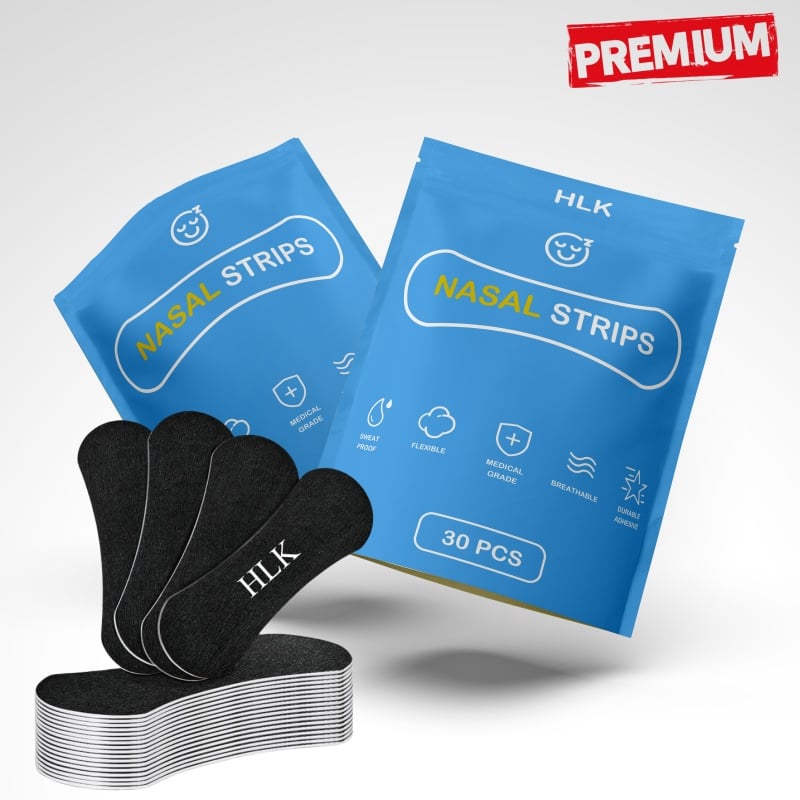
Material thickness fundamentally determines the mechanical properties that enable nasal passage opening. Thinner substrates offer enhanced conformability but may compromise the lifting force required for effective dilation. Conversely, thicker materials provide superior structural integrity yet can create comfort issues during extended wear periods. Understanding these trade-offs enables manufacturers to optimize nasal strip materials for specific user demographics and application scenarios.
The substrate material selection process involves evaluating polymer compositions, fiber orientations, and manufacturing techniques that influence both thickness uniformity and mechanical performance. Advanced nonwoven technologies allow precise control over material density gradients, enabling manufacturers to achieve targeted thickness profiles while maintaining consistent support characteristics throughout the strip structure.
Material Science Fundamentals
Polymer Matrix Properties
The polymer matrix forms the foundation of effective nasal strip materials, with molecular structure directly influencing thickness-to-strength ratios. Thermoplastic elastomers provide excellent flexibility while maintaining dimensional stability under varying temperature and humidity conditions. These materials demonstrate superior elastic recovery properties, ensuring consistent performance throughout the typical 8-12 hour wear cycle that users expect from quality nasal strips.
Cross-linking density within the polymer matrix affects both mechanical properties and material thickness requirements. Higher cross-link densities create stiffer materials that require reduced thickness to achieve equivalent support forces. However, this increased stiffness must be balanced against user comfort considerations, particularly for individuals with sensitive skin or those requiring extended wear periods.
Modern nasal strip materials incorporate specialized polymer blends that optimize the relationship between thickness and performance. These formulations often include plasticizers that enhance flexibility without compromising structural integrity, allowing manufacturers to achieve thinner profiles while maintaining necessary support characteristics.
Fiber Architecture Considerations
The internal fiber structure of nasal strip materials significantly impacts the thickness-support balance through directional strength properties. Oriented fiber arrangements can concentrate support forces along specific axes, reducing overall material thickness requirements while maintaining effective nasal dilation capabilities. This approach enables manufacturers to create thinner strips without sacrificing performance.
Nonwoven manufacturing techniques allow precise control over fiber density and orientation patterns within nasal strip materials. By strategically positioning high-strength fibers in tension-bearing regions, manufacturers can minimize thickness while maximizing support effectiveness. This targeted approach to material design represents a significant advancement in nasal strip technology.
Multi-layered fiber architectures provide additional opportunities to optimize thickness-support relationships. Combining high-modulus core layers with softer surface materials creates composite structures that deliver superior support performance while maintaining skin-friendly contact properties. These advanced constructions enable significant thickness reductions without compromising functionality.
Engineering Performance Parameters
Mechanical Testing Standards
Standardized testing protocols evaluate the mechanical properties of nasal strip materials under conditions that simulate real-world usage scenarios. Tensile strength measurements determine the maximum stress that materials can withstand before failure, providing critical data for thickness optimization. These tests reveal how material composition and thickness interact to influence overall performance characteristics.
Flexural testing assesses the bending properties of nasal strip materials, particularly important for understanding how thickness variations affect conformability to nasal contours. Materials must demonstrate sufficient flexibility to accommodate facial movement while maintaining consistent support forces throughout the wear cycle. This balance requires careful consideration of material thickness and composition.
Fatigue resistance testing evaluates how nasal strip materials perform under repeated stress cycles that occur during normal breathing and facial movement. Thicker materials generally exhibit superior fatigue resistance, but advanced material formulations can achieve equivalent performance with reduced thickness through improved molecular design and fiber architecture optimization.
Adhesion Performance Factors
The thickness of nasal strip materials directly influences adhesive bonding characteristics and long-term attachment performance. Thinner substrates provide enhanced conformability that improves adhesive contact with skin surfaces, potentially reducing the adhesive coating thickness required for secure attachment. This relationship enables overall product thickness reduction while maintaining reliable adhesion throughout the wear period.
Material flexibility affects adhesive stress distribution across the bonded interface, with more flexible substrates providing more uniform stress patterns that enhance adhesion durability. Optimizing material thickness to achieve appropriate flexibility levels can significantly improve adhesive performance while reducing overall product thickness and improving user comfort.
Environmental resistance properties of nasal strip materials must maintain performance across varying temperature and humidity conditions. Thicker materials may provide better dimensional stability under extreme conditions, but advanced polymer formulations can achieve equivalent stability with reduced thickness through improved molecular design and additive incorporation.
Manufacturing Process Optimization
Production Control Methods
Manufacturing process control systems enable precise thickness regulation throughout nasal strip materials production runs. Advanced monitoring technologies track material thickness in real-time, allowing immediate adjustments to maintain consistent specifications. This level of control ensures that thickness-support optimization remains consistent across large production volumes.
Calendering processes provide excellent thickness control capabilities while simultaneously influencing material density and mechanical properties. Controlled compression during calendering can optimize the relationship between thickness and support characteristics, enabling manufacturers to achieve targeted performance specifications with minimal material waste.
Quality control protocols for nasal strip materials include comprehensive thickness mapping and mechanical property verification procedures. These systems ensure that manufactured materials meet design specifications for both dimensional accuracy and performance characteristics, maintaining the critical balance between thickness and support effectiveness.
Material Forming Techniques
Advanced forming techniques enable precise control over thickness gradients within nasal strip materials, allowing manufacturers to optimize support distribution across the strip geometry. Variable thickness profiles can concentrate material in high-stress regions while reducing thickness in areas where flexibility is prioritized, achieving superior overall performance.
Thermoforming processes can modify the thickness-support relationship in nasal strip materials through controlled heating and shaping operations. These techniques allow manufacturers to create three-dimensional structures that enhance support effectiveness while maintaining minimal overall thickness, improving both performance and user comfort.
Embossing and texturing processes can influence the effective thickness and support characteristics of nasal strip materials without changing the base material thickness. Surface modifications can enhance structural rigidity in specific directions while maintaining flexibility in others, optimizing the thickness-support balance for improved performance.
Application-Specific Design Considerations
User Comfort Requirements
User comfort considerations significantly influence the optimal thickness-support balance in nasal strip materials. Individuals with sensitive skin require thinner, more flexible materials that minimize pressure points while still providing adequate nasal dilation. Understanding these comfort requirements guides material thickness optimization for different user demographics.
Extended wear applications demand nasal strip materials that maintain comfort throughout prolonged use periods. Thicker materials may provide superior initial support but can cause discomfort during extended wear, while thinner materials with optimized support characteristics offer better long-term comfort without sacrificing effectiveness.
Skin compatibility testing evaluates how different material thicknesses and compositions interact with human skin under typical use conditions. These studies reveal optimal thickness ranges that maximize support effectiveness while minimizing the risk of skin irritation or discomfort during normal wear periods.
Environmental Performance Factors
Environmental conditions significantly impact the performance of nasal strip materials, with thickness playing a crucial role in maintaining consistent support characteristics across varying temperature and humidity levels. Thicker materials generally provide better dimensional stability, but advanced material formulations can achieve equivalent performance with reduced thickness.
Moisture resistance properties affect how nasal strip materials perform in high-humidity environments or during physical activity. The thickness-support relationship must account for potential moisture absorption effects that could alter material properties and reduce support effectiveness over time.
Temperature cycling tests evaluate how nasal strip materials maintain their thickness-support balance across typical environmental temperature ranges. Materials must demonstrate stable performance characteristics regardless of ambient temperature conditions, ensuring consistent user experience across diverse climatic conditions.
Future Development Trends
Advanced Material Technologies
Emerging material technologies promise to revolutionize the thickness-support balance in nasal strip materials through advanced polymer chemistry and nanostructure engineering. Smart materials that respond to environmental conditions can optimize their support characteristics automatically, potentially eliminating the traditional thickness-support trade-offs.
Nanotechnology applications in nasal strip materials enable unprecedented control over material properties at the molecular level. Nanofiber reinforcement systems can dramatically improve support characteristics while allowing significant thickness reductions, creating new possibilities for ultra-thin, high-performance nasal strips.
Bio-inspired material designs draw from natural structures that achieve exceptional strength-to-thickness ratios through hierarchical architectures. These approaches could enable the development of nasal strip materials that surpass current performance limitations while maintaining user comfort and safety requirements.
Customization Possibilities
Personalized nasal strip materials represent an emerging trend that could optimize thickness-support balance for individual users based on their specific anatomical and performance requirements. Advanced manufacturing techniques enable cost-effective customization that was previously impossible with traditional production methods.
Digital design tools allow rapid prototyping and testing of different thickness-support combinations, accelerating the development of optimized nasal strip materials for specific applications. These capabilities enable manufacturers to explore design spaces that were previously impractical to investigate through traditional development approaches.
Additive manufacturing technologies could enable on-demand production of nasal strip materials with precisely controlled thickness gradients and support characteristics. This approach would allow unprecedented customization capabilities while maintaining cost-effective production for both standard and specialized applications.
FAQ
How does material thickness affect nasal strip effectiveness
Material thickness directly influences the support force that nasal strip materials can generate to dilate nasal passages. Thicker materials typically provide greater structural rigidity and higher support forces, but they may compromise user comfort during extended wear. The optimal thickness depends on the specific polymer composition, fiber architecture, and intended application requirements. Advanced materials can achieve effective support with reduced thickness through optimized molecular design and strategic fiber orientation.
What factors determine the ideal thickness-support balance
The ideal thickness-support balance in nasal strip materials depends on user comfort requirements, environmental conditions, wear duration, and performance expectations. Sensitive skin users benefit from thinner, more flexible materials, while users requiring maximum dilation may prefer slightly thicker options with higher support forces. Manufacturing considerations, cost constraints, and regulatory requirements also influence the optimal balance for different market segments and applications.
Can advanced manufacturing improve thickness-support optimization
Advanced manufacturing techniques significantly enhance thickness-support optimization capabilities through precise process control and innovative forming methods. Variable thickness profiling allows manufacturers to concentrate material in high-stress regions while reducing thickness elsewhere. Multi-layer construction techniques enable composite designs that optimize support and comfort characteristics independently. Real-time process monitoring ensures consistent quality and performance across production runs.
What role do environmental conditions play in material selection
Environmental conditions significantly impact nasal strip materials performance, influencing the optimal thickness-support relationship for different applications. High humidity environments may require materials with enhanced moisture resistance, potentially affecting thickness requirements. Temperature variations can alter material properties, requiring careful selection of polymer compositions that maintain consistent performance. UV exposure, chemical resistance, and storage conditions also influence material selection criteria and thickness optimization strategies.
One-Stop Custom Tape & Patch Supplier, Fully Certified & Safety Guaranteed
Name: Vicky Zhou
Call/Text: +86 198 0595 7675
Email: [email protected]
Website:https://www.hlktape.com
YouTube:https://www.youtube.com/@HLKTape